
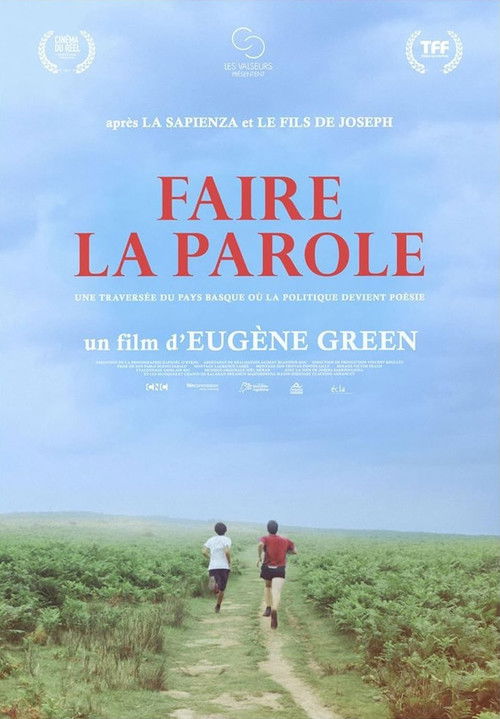
Faire la parole
Free on SceneLog — log in or create an account to track it.
Overview
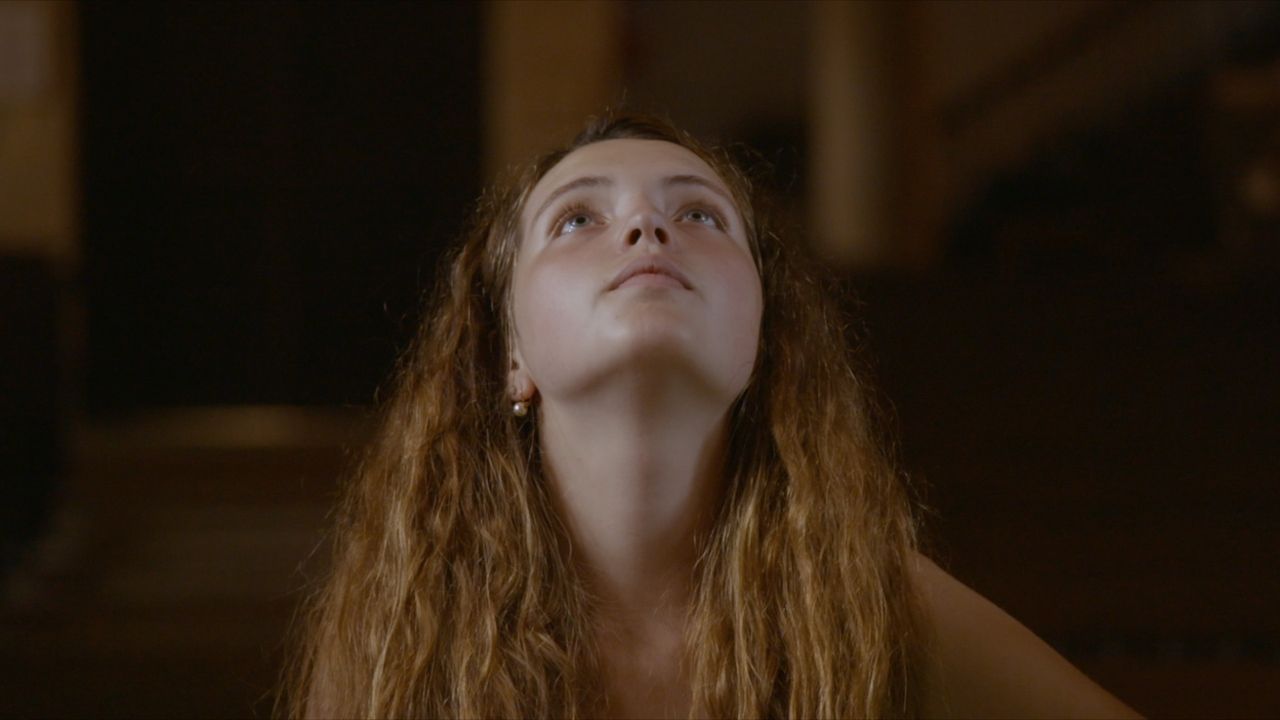
Opening with the testimony of a politically exiled Basque author reminiscing on a childhood where he was forced to “hide his language as something ugly”, Faire la parole then keeps apace with some young people from the French and Spanish Basque Country: Nora, who saw the newspaper where she worked closed by the Guardia Civil in 2003, then Aitor, Ana and Ortzi. The last three, still teenagers, lend a summery and easy-going tone to the film, which is magnificently framed by Eugène Green’s long-time cameraman, Raphael O’Byrne. The dialogue that settles in between the younger members and those in their thirties has a rare quality, as if the difference of language – which each has had to impose on their family or on their national entourage – had almost tacitly created a secret community. Starting with the political stakes (regional languages versus centralism), the story hikes over the mountains with these new friends brought together by the filmmaker.
Comments
Be the first to comment.
Leave a comment
Your email won't be published. Comments are reviewed before they appear.